
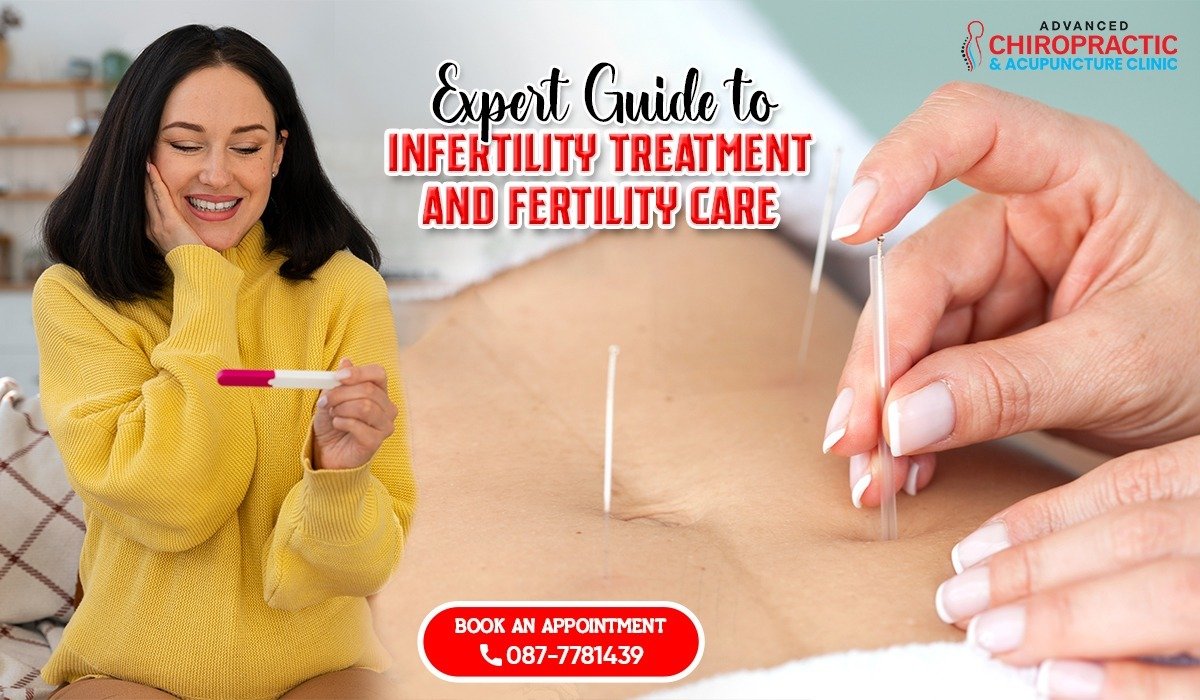
The Expert Guide to Infertility Treatment and Fertility Care in 2026
One in six couples worldwide is affected by infertility. That is not a fringe statistic; it is an epidemic hiding in plain sight. And yet, most people only discover the full landscape of their options after months, sometimes years, of navigating a system that defaults to its most expensive solutions first.
Here is what I want you to know before we go any further: infertility treatment has changed dramatically in the last decade. The data is compelling, the clinical evidence is growing, and integrative approaches, particularly infertility treatment by acupuncture in Limerick, are now backed by peer-reviewed research that practitioners and patients alike can no longer afford to ignore.
This guide will cut through the noise, lay out exactly what the science says, and help you make smarter, more informed decisions about your fertility journey.
Let’s start with what is actually happening, because understanding the problem is the first step to solving it.
Infertility Is More Common Than You Think and More Complex
Most people assume infertility is primarily a “female issue.” The research disagrees. According to the World Health Organisation, male factor infertility accounts for roughly 50% of all infertility cases globally. This is one of the most consequential data points in reproductive health because it means that half of all couples pursuing infertility treatment are directing all of their attention to only one part of the equation.
✦ 1 in 6 couples are affected by infertility worldwide (WHO, 2023)
✦ 50% Of cases involve male factor infertility
✦ 40% IVF success rate increase when combined with acupuncture (meta-analysis data)
✦ 86% Of unexplained infertility cases have identifiable underlying causes
Infertility has multiple root causes, such as hormonal imbalances, structural problems, immune factors, lifestyle triggers, and in a significant number of cases, a combination of several factors at once. Effective infertility treatment starts with an accurate diagnosis. And yet, the average couple waits over two years before seeking specialist help. That delay is costly both emotionally and clinically.
The Infertility Treatment Landscape: What You Actually Need to Know
The conventional treatment pathway follows a fairly predictable arc: timed intercourse, ovulation induction with medication, intrauterine insemination (IUI), and then, if none of these produces results, in vitro fertilisation (IVF) or intracytoplasmic sperm injection (ICSI). Each step is more invasive and more expensive than the last.
What this pathway often fails to account for is the underlying systemic health of both partners. A body under chronic stress produces sub-optimal reproductive outcomes. A hormonal environment disrupted by sleep deprivation, poor nutrition, or inflammatory load significantly reduces the efficacy of even the most advanced medical interventions. This is where integrative medicine comes in. and specifically acupuncture, enters as a clinically significant force multiplier.
| Treatment Approach | Best For | Invasiveness | Combines with Acupuncture? |
| Lifestyle and Nutritional Optimisation | All cases-foundational | None | Highly complementary |
| Acupuncture and TCM | Hormonal imbalance, stress, unexplained infertility, IVF support | Minimal | Core approach |
| Ovulation Induction (Clomid/Letrozole) | Anovulation, PCOS | Low–Moderate | Enhances response |
| IUI (Intrauterine Insemination) | Mild male factor, cervical issues | Moderate | Supports outcomes |
| IVF/ICSI | Severe factor infertility, failed prior treatment | High | Meta-analyses show 40%+ improvement |
The key insight here: these approaches are not competing. They are cumulative. The most successful fertility journeys combine the best of conventional reproductive medicine with the systemic, regulatory power of integrative therapies.
Infertility Treatment by Acupuncture: What the Research Actually Shows
Let’s talk about acupuncture the way it deserves to be talked about: with data, not dismissal, and without overstatement. Because the evidence is genuinely compelling, it has reached a point where informed practitioners in reproductive medicine are no longer debating whether acupuncture works for fertility. They are debating precisely how and for whom it works best.
A 2022 systematic review published in the Journal of Clinical Medicine found that acupuncture significantly improved clinical pregnancy rates in women undergoing IVF, with a pooled odds ratio of 1.65, meaning patients receiving acupuncture were 65% more likely to achieve a clinical pregnancy than control groups.
That is not a small effect. And it is not an isolated finding. Multiple meta-analyses conducted between 2018 and 2024 consistently show that acupuncture, when delivered by a qualified practitioner and timed appropriately within the fertility cycle, improves outcomes across several measurable parameters. The supporting evidence for infertility treatment by acupuncture in Limerick is well-established.
The 4 Mechanisms That Matter Most-
☞ [01] Hormonal Regulation:
Acupuncture stimulates the hypothalamic-pituitary-ovarian axis. It is the central command system for reproductive hormones. Clinical studies show measurable improvements in FSH, LH, oestradiol, and progesterone balance in women receiving regular acupuncture treatment.
☞ [02] Uterine Blood Flow:
Acupuncture measurably increases blood flow to the uterus and ovaries. Improved endometrial perfusion is directly associated with higher implantation success rates. This is one of the most consistent findings across acupuncture fertility research.
☞ [03] Cortisol and Stress Reduction:
Chronic stress elevates cortisol, which suppresses GnRH; this is the hormone that triggers ovulation. Acupuncture consistently reduces cortisol and activates the parasympathetic nervous system, creating the physiological conditions that allow reproductive hormones to function optimally.
☞ [04] Sperm Quality Improvement:
Often overlooked: acupuncture has demonstrated statistically significant improvements in sperm motility, morphology, and concentration in men with idiopathic infertility, directly addressing the 50% of infertility cases driven by male factors.
How to Build a Smart Fertility Treatment Protocol- Step by Step
The couples who achieve the best outcomes, whether naturally or with assisted reproduction, are those who approach their fertility journey systematically. Here is the framework that the evidence supports:
[1] Comprehensive Diagnosis — Both Partners
Before any treatment begins, both partners should be assessed. Hormone panels, semen analysis, thyroid function, vitamin D levels, and a detailed case history are non-negotiable starting points. You cannot optimise what you have not measured.
[2] Start Acupuncture Three Months Before Any ART Cycle
The minimum effective window for acupuncture to influence egg quality and endometrial receptivity is three menstrual cycles. Starting earlier gives the body time to regulate, rebalance, and optimise the reproductive environment before medical intervention begins.
[3] Optimise the Foundations
Nutrition, sleep, stress, movement, and toxin exposure are fertility variables, not lifestyle choices. Your qualified practitioner should be assessing and advising on all of these as part of a holistic treatment plan, not as optional add-ons.
[4] Continue Acupuncture Through and After Your ART Cycle
The evidence is strongest for acupuncture on the day of embryo transfer. But continuing treatment through the first trimester supports implantation, reduces miscarriage risk, and helps sustain progesterone levels critical for early pregnancy.
[5] Reassess and Iterate Every Cycle
Fertility treatment is not a one-size-fits-all protocol. An experienced practitioner will reassess your response, adjust treatment frequency, and refine the approach based on what your body is showing at each stage. Flexibility and clinical judgment separate average outcomes from exceptional ones.
The One Thing Most Fertility Patients Miss and How to Fix It
Here’s the hard truth: the fertility industry is heavily weighted toward high-cost, high-intervention solutions. IVF is a remarkable technology, but it is also expensive, physically demanding, and carries a success rate that most clinics prefer not to lead with. For many couples, the most effective path to parenthood is not the most aggressive one. It is the most informed one.
Investing in your body’s systemic health is not a compromise. It can be done through qualified acupuncture, evidence-based nutritional support, stress reduction, and the expertise of practitioners. They treat the whole person, not just the reproductive organs. It is the foundation on which every other intervention stands. And the data now says so clearly enough that this is no longer a matter of opinion.
Your fertility is not a problem to be solved by a single clinic visit. It is a system to be understood, supported, and optimised. The couples who grasp that distinction are the ones who give themselves the best possible chance.
Final Thought
Everything outlined in this guide is the foundation of what we do every day. At Advanced Chiropractic and Acupuncture Clinic, we specialise in Infertility Treatment in Munster using evidence-based acupuncture protocols tailored to each patient’s specific hormonal profile, health history, and fertility goals. Whether you are just beginning to explore your options, preparing for an IVF cycle, or looking to address the root causes behind unexplained infertility. Our experienced practitioners are here to build a genuinely personalised treatment plan with you.
We treat both partners. We work alongside your reproductive specialist. And we bring the clinical rigour, the diagnostic precision, and the integrative expertise that modern fertility care demands.
Your journey deserves the best possible support from day one. Book your initial fertility consultation today and find out exactly what a targeted, evidence-based acupuncture protocol can do for your outcome.
━ ◦ ❖ ◦━